Published on Readora
What Is an eBook? Everything You Need to Know
Books have always been one of the most powerful ways to learn, imagine, and explore new ideas. For centuries, knowledge was shared almost exclusively through printed pages. Today, technology has transformed that experience, making it possible to carry an entire library in your pocket.
That transformation gave rise to the eBook.
Millions of people around the world now read digitally, whether on a smartphone during a commute, a tablet at home, or an eReader while travelling. Digital books have become an essential part of modern reading because they combine convenience, accessibility, and portability in ways that traditional books simply cannot.
If you've ever wondered what an eBook actually is, how it works, or why so many readers prefer digital books, you're not alone. Understanding the basics makes it much easier to enjoy everything digital reading has to offer.
At Readora.ng, thousands of readers are embracing eBooks because they provide instant access to books across business, fiction, romance, self-help, technology, finance, biographies, and many other categories.
Let's explore what makes eBooks such an important part of modern reading.
1. What Exactly Is an eBook?
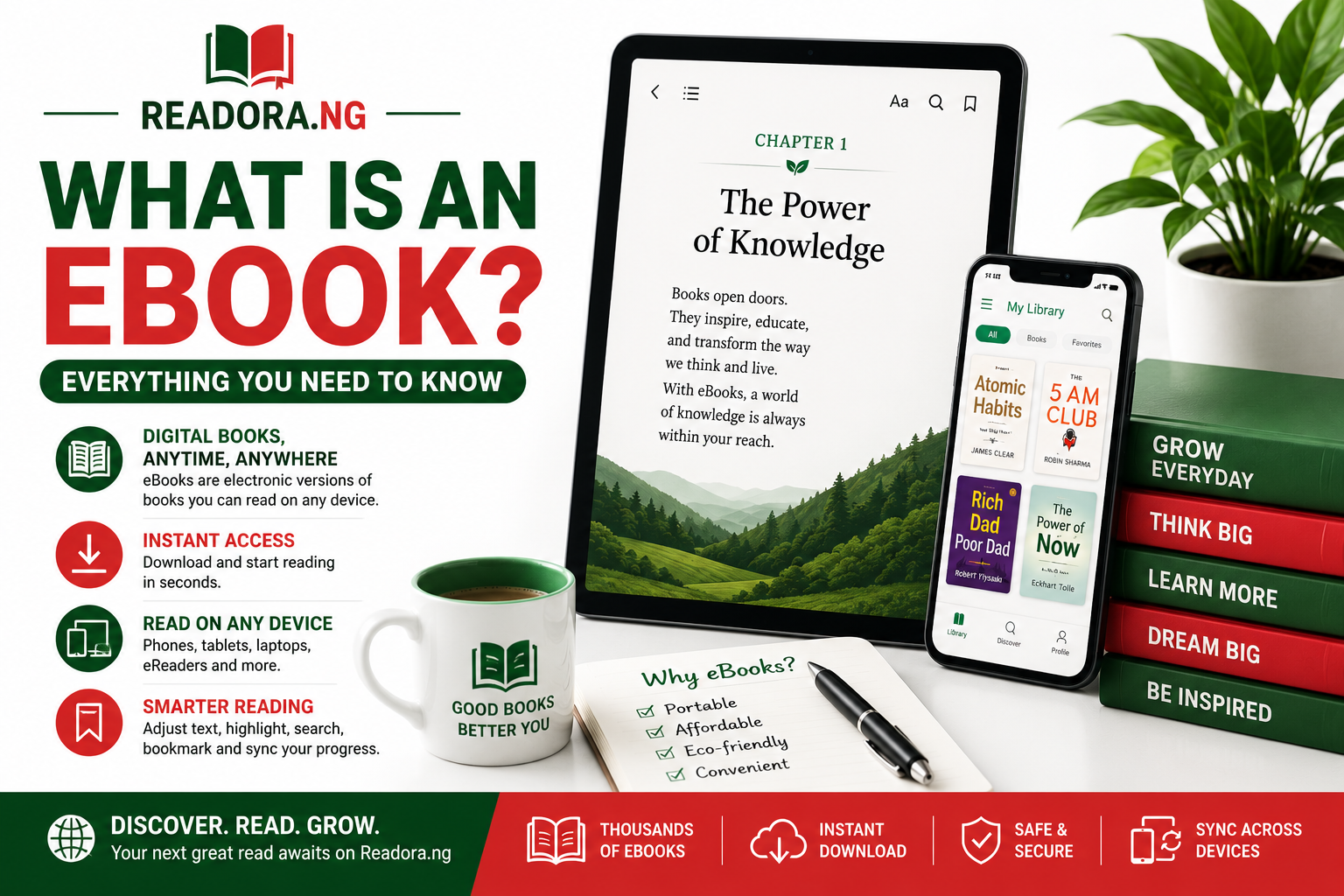
An eBook, short for electronic book, is a digital version of a printed book that can be read using electronic devices.
Unlike printed books, eBooks exist as digital files that readers can download and store on devices such as:
Smartphones
Tablets
Laptops
Desktop computers
Dedicated eReaders
The content remains the same as a traditional book, but the reading experience becomes more flexible and portable.
Many eBooks also include features that printed books cannot offer, such as adjustable text sizes, built-in dictionaries, bookmarks, search functions, and synchronized reading progress.
2. How Do eBooks Work?
Reading an eBook is surprisingly simple.
After purchasing or downloading an eBook, the file is stored on your device or in your digital library. Using a compatible reading application, the book opens just like any other document, allowing you to flip through pages digitally.
Many modern reading apps automatically remember where you stopped reading, making it easy to continue later from another device.
Some platforms even synchronize highlights, notes, and bookmarks automatically.
3. Common eBook Formats
Not every eBook uses the same file format.
The most common include:
PDF
A fixed-layout format that preserves the original appearance of each page.
Best for:
Manuals
Study materials
Illustrated books
Printable resources
EPUB
The most widely supported eBook format.
Text automatically adjusts to different screen sizes, creating a comfortable reading experience on phones, tablets, and eReaders.
MOBI
Originally developed for Kindle devices, MOBI remains compatible with many older Kindle libraries, although newer formats have become more common.
Choosing the right format often depends on the device you plan to use.
4. Where Can You Read eBooks?
One of the biggest advantages of digital reading is flexibility.
eBooks can be enjoyed almost anywhere.
Popular devices include:
Android smartphones
iPhones
Tablets
Windows computers
Mac computers
Dedicated eReaders
Many readers begin a chapter on one device and continue seamlessly on another.
5. Why Millions of Readers Prefer eBooks
Digital books continue growing in popularity for several reasons.
They provide:
Instant downloads
Adjustable text sizes
Built-in search
Lightweight portability
Offline reading
Cloud synchronization
Digital highlighting
Bookmarking
Lower storage requirements
Access from multiple devices
These advantages make reading easier to fit into modern lifestyles.
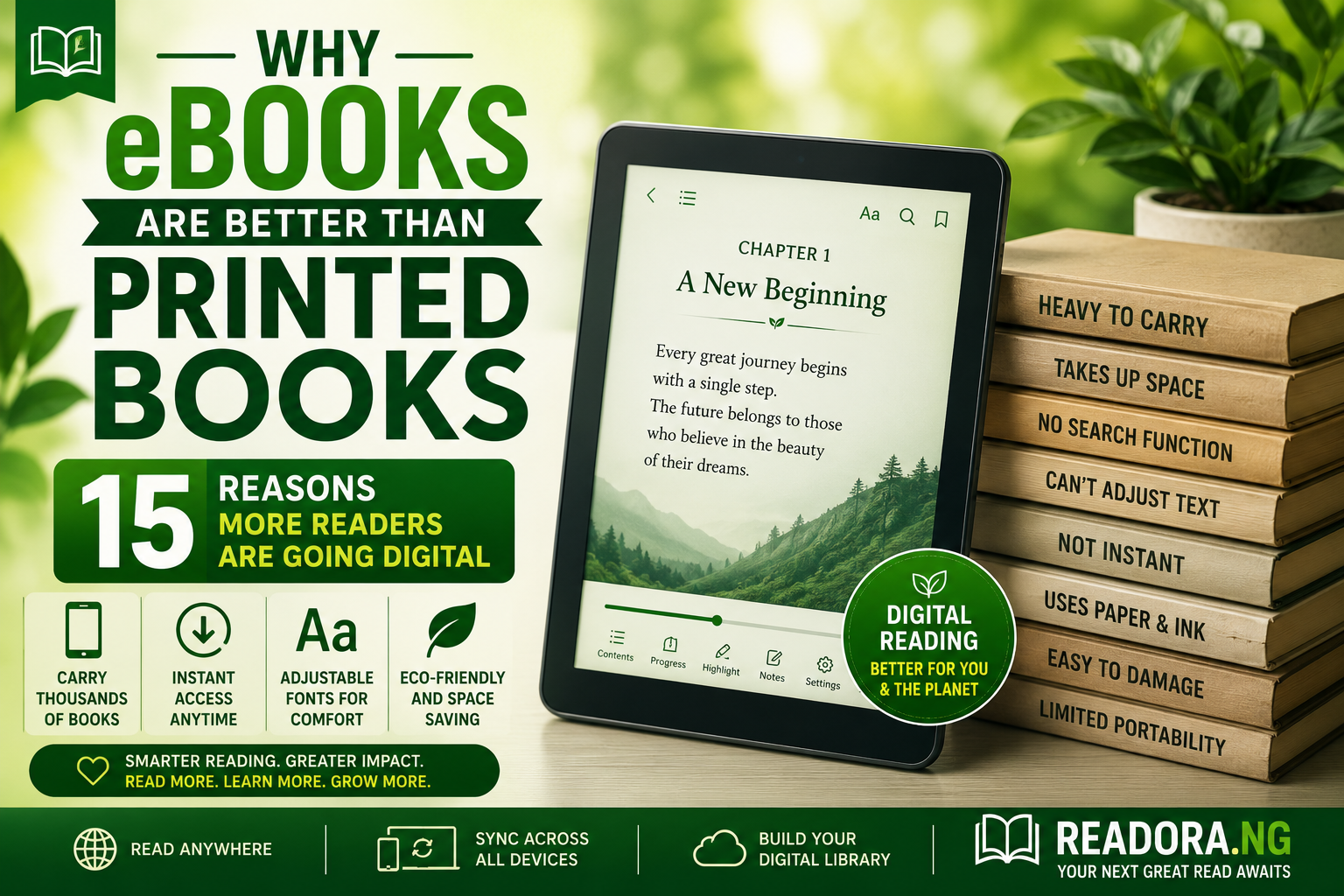
6. Are eBooks Better Than Printed Books?
Rather than replacing printed books, eBooks offer an alternative that suits different situations.
Printed books remain ideal for readers who enjoy collecting physical libraries or appreciate the tactile experience of paper.
eBooks excel when convenience matters.
Travelling.
Studying.
Commuting.
Reading at night.
Learning on the go.
Many readers now enjoy both formats depending on where they are and what they're reading.
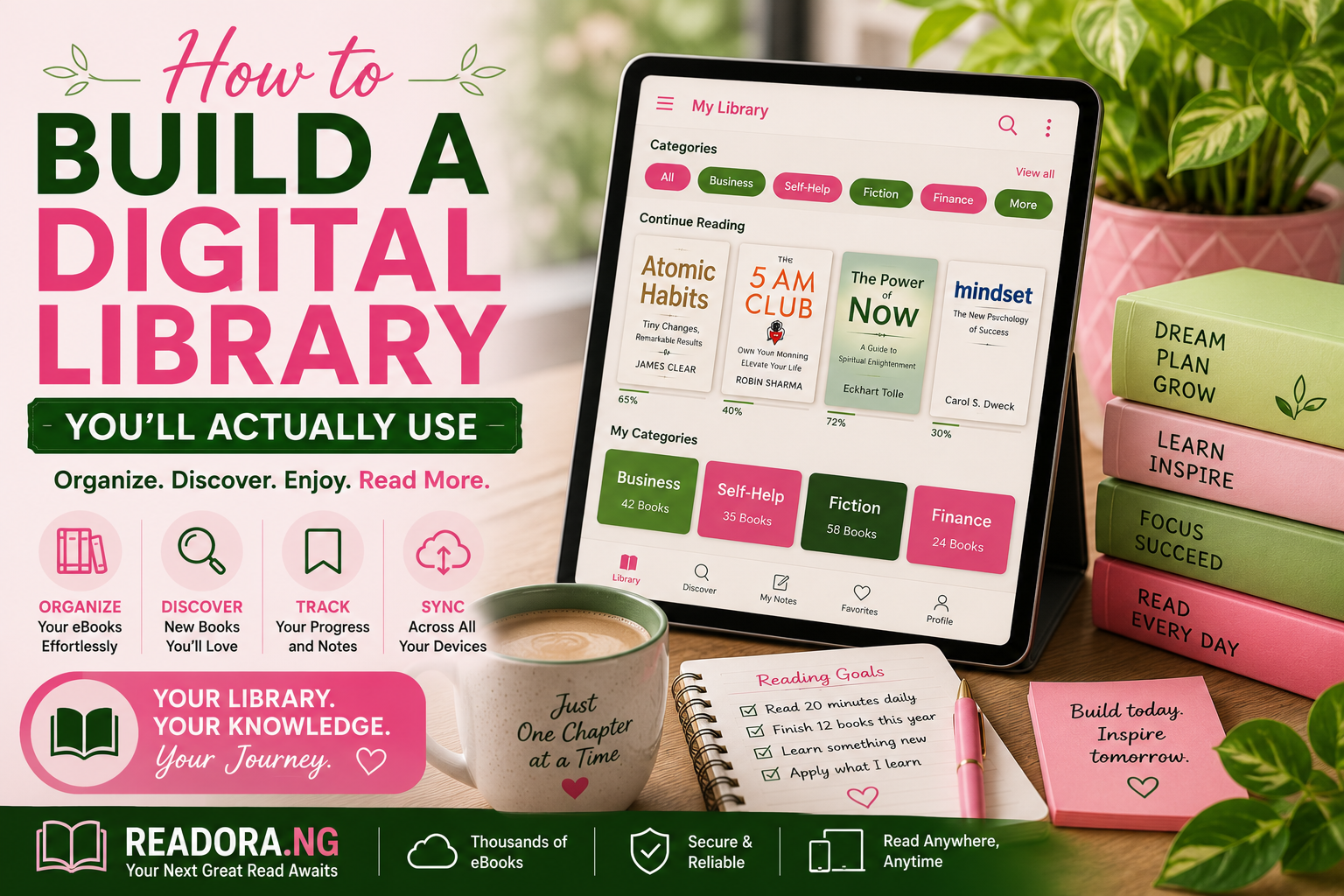
7. Building Your First Digital Library
Starting a digital library is easier than ever.
Instead of filling bookshelves, readers simply download titles that match their interests.
A balanced collection might include:
Business
Self-help
Romance
Fiction
Technology
History
Personal finance
Biographies
Over time, your library becomes a valuable resource that is always available, wherever you go.
Platforms like Readora.ng make discovering and organizing quality eBooks simple, helping readers gradually build collections they'll continue using for years.
8. Choosing the Right eBooks
Not every book belongs in every library.
The best collections grow intentionally.
Choose books that:
Match your interests.
Support your goals.
Introduce new perspectives.
Encourage lifelong learning.
Entertain and inspire.
Quality will always matter more than quantity.
Frequently Asked Questions
Can I read an eBook without the internet?
Yes. Once an eBook has been downloaded to your device, it can usually be read offline using a compatible reading app.
Do I need a Kindle to read eBooks?
No. Most eBooks can be read on smartphones, tablets, computers, and many different reading applications.
How many eBooks can a phone hold?
Modern smartphones can often store hundreds or even thousands of eBooks, depending on available storage and file sizes.
Do eBooks expire?
Purchased eBooks generally remain available in your digital library, although access may depend on the platform's terms and the file format.
Final Thoughts
The eBook has transformed the way people read, making knowledge, education, and entertainment more accessible than ever before.
Whether you're exploring your first digital book or expanding an existing collection, eBooks offer convenience, portability, and flexibility that fit naturally into everyday life.
At Readora.ng, every download is an opportunity to discover a new story, develop a valuable skill, or gain knowledge that can make a lasting difference.
Your next great book doesn't need a shelf.
It only needs a screen.
Books have always been one of the most powerful ways to learn, imagine, and explore new ideas. For centuries, knowledge was shared almost exclusively through printed pages. Today, technology has transformed that experience, making it possible to carry an entire library in your pocket.
That transformation gave rise to the eBook.
Millions of people around the world now read digitally, whether on a smartphone during a commute, a tablet at home, or an eReader while travelling. Digital books have become an essential part of modern reading because they combine convenience, accessibility, and portability in ways that traditional books simply cannot.
If you've ever wondered what an eBook actually is, how it works, or why so many readers prefer digital books, you're not alone. Understanding the basics makes it much easier to enjoy everything digital reading has to offer.
At Readora.ng, thousands of readers are embracing eBooks because they provide instant access to books across business, fiction, romance, self-help, technology, finance, biographies, and many other categories.
Let's explore what makes eBooks such an important part of modern reading.
1. What Exactly Is an eBook?
An eBook, short for electronic book, is a digital version of a printed book that can be read using electronic devices.
Unlike printed books, eBooks exist as digital files that readers can download and store on devices such as:
Smartphones
Tablets
Laptops
Desktop computers
Dedicated eReaders
The content remains the same as a traditional book, but the reading experience becomes more flexible and portable.
Many eBooks also include features that printed books cannot offer, such as adjustable text sizes, built-in dictionaries, bookmarks, search functions, and synchronized reading progress.
2. How Do eBooks Work?
Reading an eBook is surprisingly simple.
After purchasing or downloading an eBook, the file is stored on your device or in your digital library. Using a compatible reading application, the book opens just like any other document, allowing you to flip through pages digitally.
Many modern reading apps automatically remember where you stopped reading, making it easy to continue later from another device.
Some platforms even synchronize highlights, notes, and bookmarks automatically.
3. Common eBook Formats
Not every eBook uses the same file format.
The most common include:
A fixed-layout format that preserves the original appearance of each page.
Best for:
Manuals
Study materials
Illustrated books
Printable resources
EPUB
The most widely supported eBook format.
Text automatically adjusts to different screen sizes, creating a comfortable reading experience on phones, tablets, and eReaders.
MOBI
Originally developed for Kindle devices, MOBI remains compatible with many older Kindle libraries, although newer formats have become more common.
Choosing the right format often depends on the device you plan to use.
4. Where Can You Read eBooks?
One of the biggest advantages of digital reading is flexibility.
eBooks can be enjoyed almost anywhere.
Popular devices include:
Android smartphones
iPhones
Tablets
Windows computers
Mac computers
Dedicated eReaders
Many readers begin a chapter on one device and continue seamlessly on another.
5. Why Millions of Readers Prefer eBooks
Digital books continue growing in popularity for several reasons.
They provide:
Instant downloads
Adjustable text sizes
Built-in search
Lightweight portability
Offline reading
Cloud synchronization
Digital highlighting
Bookmarking
Lower storage requirements
Access from multiple devices
These advantages make reading easier to fit into modern lifestyles.
6. Are eBooks Better Than Printed Books?
Rather than replacing printed books, eBooks offer an alternative that suits different situations.
Printed books remain ideal for readers who enjoy collecting physical libraries or appreciate the tactile experience of paper.
eBooks excel when convenience matters.
Travelling.
Studying.
Commuting.
Reading at night.
Learning on the go.
Many readers now enjoy both formats depending on where they are and what they're reading.
7. Building Your First Digital Library
Starting a digital library is easier than ever.
Instead of filling bookshelves, readers simply download titles that match their interests.
A balanced collection might include:
Business
Self-help
Romance
Fiction
Technology
History
Personal finance
Biographies
Over time, your library becomes a valuable resource that is always available, wherever you go.
Platforms like Readora.ng make discovering and organizing quality eBooks simple, helping readers gradually build collections they'll continue using for years.
8. Choosing the Right eBooks
Not every book belongs in every library.
The best collections grow intentionally.
Choose books that:
Match your interests.
Support your goals.
Introduce new perspectives.
Encourage lifelong learning.
Entertain and inspire.
Quality will always matter more than quantity.
Frequently Asked Questions
Can I read an eBook without the internet?
Yes. Once an eBook has been downloaded to your device, it can usually be read offline using a compatible reading app.
Do I need a Kindle to read eBooks?
No. Most eBooks can be read on smartphones, tablets, computers, and many different reading applications.
How many eBooks can a phone hold?
Modern smartphones can often store hundreds or even thousands of eBooks, depending on available storage and file sizes.
Do eBooks expire?
Purchased eBooks generally remain available in your digital library, although access may depend on the platform's terms and the file format.
Final Thoughts
The eBook has transformed the way people read, making knowledge, education, and entertainment more accessible than ever before.
Whether you're exploring your first digital book or expanding an existing collection, eBooks offer convenience, portability, and flexibility that fit naturally into everyday life.
At Readora.ng, every download is an opportunity to discover a new story, develop a valuable skill, or gain knowledge that can make a lasting difference.
Your next great book doesn't need a shelf.
It only needs a screen.
Related Articles