Published on Readora
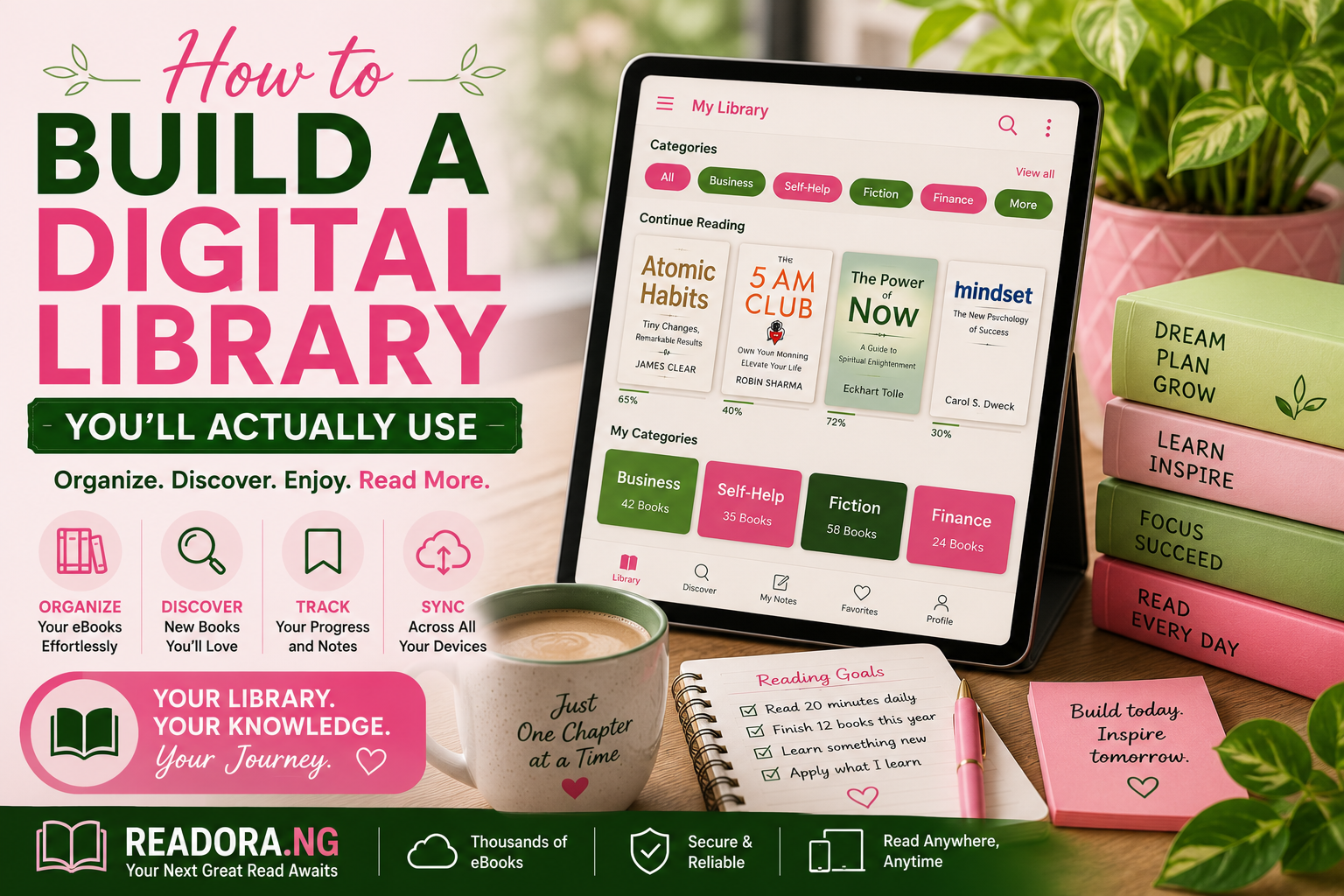
How to Build a Digital Library You'll Actually Use
There was a time when a personal library meant towering bookshelves, carefully arranged hardcovers, and the unmistakable scent of printed pages. While those collections still have their charm, today's readers are creating libraries that fit inside their pockets.
A smartphone, tablet, laptop, or eReader can now hold thousands of books without taking up a single shelf. Yet simply collecting eBooks isn't the same as building a useful digital library.
Many readers download dozens of titles, only to forget what they own. Others purchase books they'll never open because their collections become cluttered and difficult to navigate.
A well-organized digital library should do more than store books. It should make discovering your next read effortless, support your learning goals, and encourage consistent reading.
At Readora.ng, readers continue to expand their collections every day, and those who organize their libraries thoughtfully often find themselves reading more and enjoying the experience even more.
Here are practical ways to build a digital library you'll genuinely use.
1. Start With Books That Match Your Interests
One of the biggest mistakes readers make is downloading books simply because they're popular.
A bestseller isn't automatically the right book for everyone.
Instead, begin by collecting books that reflect your genuine interests.
You might enjoy:
Business and entrepreneurship
Romance
Mystery and thrillers
Science fiction
Fantasy
Self-help
Technology
Biographies
History
Personal finance
When your library reflects your interests, choosing your next book becomes much easier.
2. Organize Books by Category
A digital library quickly becomes overwhelming without structure.
Creating categories helps you locate books within seconds.
Consider organizing your collection into folders such as:
Currently Reading
Business
Personal Development
Fiction
Romance
Technology
Finance
Completed Books
Favorites
To Read Next
A little organization today saves considerable time later.
3. Don't Download Everything at Once
It's tempting to collect hundreds of free eBooks simply because they're available.
Unfortunately, an oversized library often becomes difficult to manage.
Instead of focusing on quantity, focus on quality.
Build your collection gradually with books you're genuinely excited to read.
4. Keep a "Next Up" Shelf
Decision fatigue affects reading too.
After finishing one book, many readers spend more time choosing their next title than actually reading.
Create a small "Next Up" collection containing five to ten books you're most excited about.
Having your next read already selected helps maintain momentum.
5. Use Reading Goals Instead of Download Goals
Owning books isn't the same as reading them.
Rather than measuring success by the number of books you've collected, measure it by the number you've actually finished.
Examples include:
Finish one book each month.
Read twenty pages every day.
Complete one chapter before bed.
Read for twenty minutes daily.
Simple goals encourage consistent progress.
6. Take Advantage of Highlights and Notes
One of the greatest advantages of digital reading is the ability to save highlights and personal notes.
Important ideas remain easy to find long after finishing the book.
This is especially valuable for:
Business books
Personal development
Educational resources
Professional reference books
Reviewing highlighted passages can reinforce important lessons over time.
7. Keep Fiction and Learning Balanced
A healthy reading life includes both enjoyment and education.
Reading only business books may eventually feel exhausting.
Reading only novels may limit opportunities for personal growth.
Many experienced readers alternate between fiction and non-fiction, keeping reading fresh while continuously learning something new.
8. Remove Books You'll Never Read
Digital clutter is still clutter.
If you've had a book sitting untouched for years with no intention of reading it, consider removing it from your active library or archiving it.
A cleaner collection makes choosing your next book far less overwhelming.
9. Back Up Your Library
Your digital library represents both time and money.
Backing it up protects your collection from device failures or accidental deletion.
Cloud storage, external drives, or secure online libraries can help ensure your books remain accessible whenever you need them.
10. Keep Discovering New Authors
Many readers stay with familiar authors, but some of the most rewarding discoveries come from exploring new voices.
Each year, challenge yourself to read:
A debut author.
A different genre.
A book from another country.
An unfamiliar topic.
Expanding your reading horizons keeps your library diverse and exciting.
Why Digital Libraries Continue to Grow
Digital reading has become part of everyday life because it offers unmatched flexibility.
Instead of carrying heavy books, readers can switch between novels, business guides, and educational resources with a few taps.
Features like search, bookmarks, adjustable fonts, synchronized progress, and instant downloads make digital libraries practical for modern lifestyles.
This convenience explains why more readers continue choosing platforms like Readora.ng to discover, purchase, and organize their growing ebook collections.
Frequently Asked Questions
How many eBooks should I keep in my library?
There is no perfect number. A useful library is one that contains books you genuinely plan to read and revisit.
Should I organize books by genre or author?
Either approach works well. Many readers combine both by using genre folders while sorting alphabetically within each category.
Can I build a digital library on my phone?
Yes. Modern smartphones provide more than enough storage and support numerous reading applications, making them ideal for everyday reading.
Is it better to own or borrow eBooks?
Both options have advantages. Borrowing is excellent for occasional reading, while owning allows you to revisit favorite books whenever you like.
Final Thoughts
A digital library should inspire reading rather than overwhelm it.
By collecting books thoughtfully, organizing them clearly, and focusing on quality instead of quantity, you'll create a library that supports learning, entertainment, and personal growth for years to come.
At Readora.ng, every new title is another opportunity to expand your knowledge, discover unforgettable stories, and build a collection you'll genuinely enjoy returning to.
Your library doesn't have to be the biggest.
It simply has to be one you'll actually use.
There was a time when a personal library meant towering bookshelves, carefully arranged hardcovers, and the unmistakable scent of printed pages. While those collections still have their charm, today's readers are creating libraries that fit inside their pockets.
A smartphone, tablet, laptop, or eReader can now hold thousands of books without taking up a single shelf. Yet simply collecting eBooks isn't the same as building a useful digital library.
Many readers download dozens of titles, only to forget what they own. Others purchase books they'll never open because their collections become cluttered and difficult to navigate.
A well-organized digital library should do more than store books. It should make discovering your next read effortless, support your learning goals, and encourage consistent reading.
At Readora.ng, readers continue to expand their collections every day, and those who organize their libraries thoughtfully often find themselves reading more and enjoying the experience even more.
Here are practical ways to build a digital library you'll genuinely use.
1. Start With Books That Match Your Interests
One of the biggest mistakes readers make is downloading books simply because they're popular.
A bestseller isn't automatically the right book for everyone.
Instead, begin by collecting books that reflect your genuine interests.
You might enjoy:
Business and entrepreneurship
Romance
Mystery and thrillers
Science fiction
Fantasy
Self-help
Technology
Biographies
History
Personal finance
When your library reflects your interests, choosing your next book becomes much easier.
2. Organize Books by Category
A digital library quickly becomes overwhelming without structure.
Creating categories helps you locate books within seconds.
Consider organizing your collection into folders such as:
Currently Reading
Business
Personal Development
Fiction
Romance
Technology
Finance
Completed Books
Favorites
To Read Next
A little organization today saves considerable time later.
3. Don't Download Everything at Once
It's tempting to collect hundreds of free eBooks simply because they're available.
Unfortunately, an oversized library often becomes difficult to manage.
Instead of focusing on quantity, focus on quality.
Build your collection gradually with books you're genuinely excited to read.
4. Keep a "Next Up" Shelf
Decision fatigue affects reading too.
After finishing one book, many readers spend more time choosing their next title than actually reading.
Create a small "Next Up" collection containing five to ten books you're most excited about.
Having your next read already selected helps maintain momentum.
5. Use Reading Goals Instead of Download Goals
Owning books isn't the same as reading them.
Rather than measuring success by the number of books you've collected, measure it by the number you've actually finished.
Examples include:
Finish one book each month.
Read twenty pages every day.
Complete one chapter before bed.
Read for twenty minutes daily.
Simple goals encourage consistent progress.
6. Take Advantage of Highlights and Notes
One of the greatest advantages of digital reading is the ability to save highlights and personal notes.
Important ideas remain easy to find long after finishing the book.
This is especially valuable for:
Business books
Personal development
Educational resources
Professional reference books
Reviewing highlighted passages can reinforce important lessons over time.
7. Keep Fiction and Learning Balanced
A healthy reading life includes both enjoyment and education.
Reading only business books may eventually feel exhausting.
Reading only novels may limit opportunities for personal growth.
Many experienced readers alternate between fiction and non-fiction, keeping reading fresh while continuously learning something new.
8. Remove Books You'll Never Read
Digital clutter is still clutter.
If you've had a book sitting untouched for years with no intention of reading it, consider removing it from your active library or archiving it.
A cleaner collection makes choosing your next book far less overwhelming.
9. Back Up Your Library
Your digital library represents both time and money.
Backing it up protects your collection from device failures or accidental deletion.
Cloud storage, external drives, or secure online libraries can help ensure your books remain accessible whenever you need them.
10. Keep Discovering New Authors
Many readers stay with familiar authors, but some of the most rewarding discoveries come from exploring new voices.
Each year, challenge yourself to read:
A debut author.
A different genre.
A book from another country.
An unfamiliar topic.
Expanding your reading horizons keeps your library diverse and exciting.
Why Digital Libraries Continue to Grow
Digital reading has become part of everyday life because it offers unmatched flexibility.
Instead of carrying heavy books, readers can switch between novels, business guides, and educational resources with a few taps.
Features like search, bookmarks, adjustable fonts, synchronized progress, and instant downloads make digital libraries practical for modern lifestyles.
This convenience explains why more readers continue choosing platforms like Readora.ng to discover, purchase, and organize their growing ebook collections.
Frequently Asked Questions
How many eBooks should I keep in my library?
There is no perfect number. A useful library is one that contains books you genuinely plan to read and revisit.
Should I organize books by genre or author?
Either approach works well. Many readers combine both by using genre folders while sorting alphabetically within each category.
Can I build a digital library on my phone?
Yes. Modern smartphones provide more than enough storage and support numerous reading applications, making them ideal for everyday reading.
Is it better to own or borrow eBooks?
Both options have advantages. Borrowing is excellent for occasional reading, while owning allows you to revisit favorite books whenever you like.
Final Thoughts
A digital library should inspire reading rather than overwhelm it.
By collecting books thoughtfully, organizing them clearly, and focusing on quality instead of quantity, you'll create a library that supports learning, entertainment, and personal growth for years to come.
At Readora.ng, every new title is another opportunity to expand your knowledge, discover unforgettable stories, and build a collection you'll genuinely enjoy returning to.
Your library doesn't have to be the biggest.
It simply has to be one you'll actually use.
Related Articles